Agent assist is an AI-powered co-pilot that supports human customer service agents in real time. Learn more about what is agent assist and how it works. Instead of replacing agents, it works alongside them during calls, chats, emails, and messages to provide the right information, next-best-actions, and guidance exactly when it is needed. This approach highlights the AI call center adoption benefits, resulting in faster, more accurate, and more consistent customer service, with less stress and effort for agents and better experiences for customers.
In today’s fast-paced environment, understanding how to leverage modern tools is essential for improving customer service and operational efficiency. Advanced artificial intelligence in technology enables agents to access data instantly, reducing response times and increasing accuracy. Similarly, high performance computing systems can analyze large volumes of customer interactions, providing real-time insights that help guide agents’ decisions during complex inquiries. Integrating these technologies allows customer service teams to focus on solving problems rather than searching for information.
At the same time, effective online marketing strategy planning can complement AI-powered tools by improving customer engagement and satisfaction. Businesses that invest in digital marketing performance insights can better understand customer behavior, optimize communication channels, and deliver timely, relevant messages that enhance the overall experience. For organizations in financial services, financial technology adoption trends highlight how AI-driven agent support improves transaction accuracy, reduces errors, and ensures compliance, all while maintaining a human touch.
By fully understanding what is agent assist and applying these technological, marketing, and financial strategies, companies can create seamless customer experiences. Agents are empowered to perform their roles more effectively, customers receive faster and more precise support, and organizations gain measurable improvements in efficiency and satisfaction. The combination of AI assistance with human expertise is redefining modern customer service across industries.
Top 10 AI-Powered Agent Assist Platforms
Understanding what is agent assist can help businesses improve customer service efficiency, accuracy, and agent satisfaction. Agent assist solutions act as AI-powered copilots, providing real-time guidance, recommended actions, and relevant information to human agents during calls, chats, emails, and messaging. Here are the top 10 platforms to consider:
1. Bright Pattern
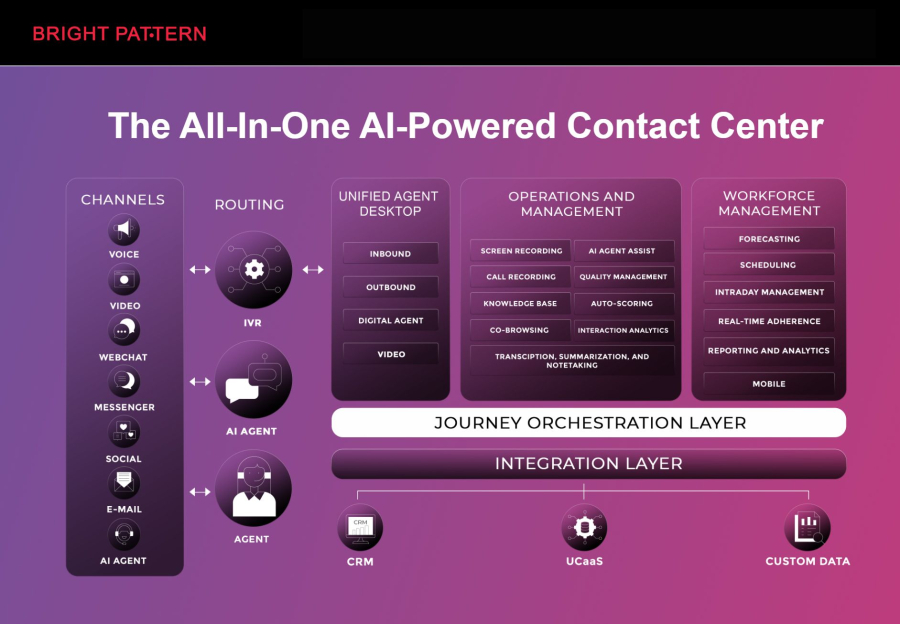
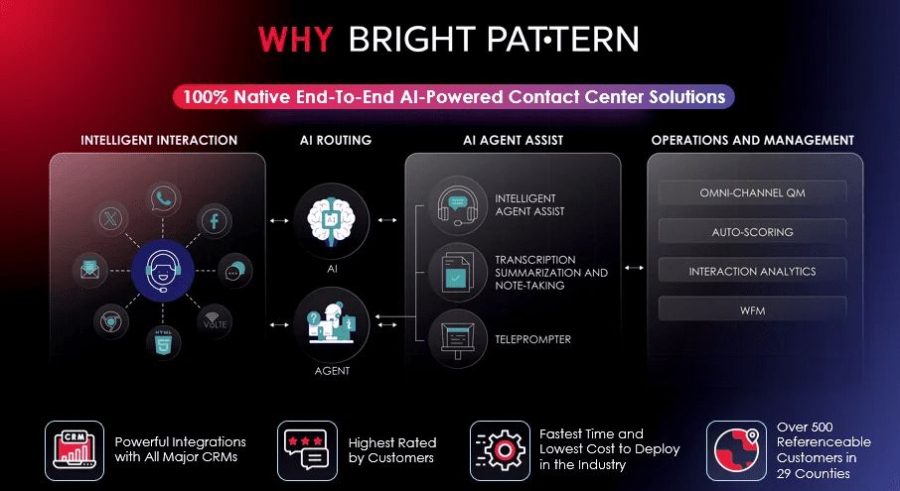
Bright Pattern leads the market in AI-powered agent assist technology, providing a seamless combination of automation and human support. Designed for contact centers of all sizes, it helps agents access the right information at the right time, reduce repetitive tasks, and improve customer satisfaction.
Key features of Bright Pattern include:
- Real-time agent guidance with AI recommendations
- Omnichannel support across calls, chat, email, and messaging
- Easy integration with existing CRM and support systems
- Advanced reporting and analytics to monitor performance
- AI-driven next-best-actions to increase efficiency
With Bright Pattern, businesses can fully understand what is agent assist and see measurable improvements in both agent productivity and customer experience.
2. Genesys
Genesys provides AI-assisted customer engagement tools that enhance agent performance with predictive guidance and workflow automation.
3. Five9
Five9 offers cloud-based AI tools that help agents with live suggestions and automated workflows to improve call handling and resolution times.
4. NICE inContact
NICE inContact leverages AI to provide agents with real-time insights and decision support, ensuring consistent and accurate customer interactions.
5. Talkdesk
Talkdesk uses AI-driven agent assist to provide real-time recommendations and streamline repetitive tasks, improving overall efficiency.
6. 8x8
8x8 offers AI call center solutions that enhance agent productivity with real-time suggestions and integrated analytics.
7. RingCentral
RingCentral combines AI assistance with omnichannel communication, helping agents provide faster and more accurate customer support.
8. Zendesk
Zendesk’s AI tools deliver contextual recommendations to agents, improving response times and customer satisfaction across channels.
9. HubSpot Service Hub
HubSpot Service Hub uses AI-powered suggestions and workflow automation to help agents handle support tickets efficiently and accurately.
10. Salesforce Service Cloud
Salesforce Service Cloud integrates AI assistant features to provide next-best-action guidance, workflow recommendations, and analytics for agents.
Clear Definition: What Is Agent Assist?
Agent assistis software, usually driven by artificial intelligence and natural language processing, that listens to or reads customer interactions and then provides real-time recommendations and support to the human agent handling the case.
Typical capabilities include:
- Understanding what the customer is asking in real time.
- Surfacing relevant knowledge articles and answers.
- Suggesting responses, next steps, and workflows.
- Automatically summarizing conversations and updating systems.
- Guiding new or less experienced agents through complex processes.
Think of agent assist as a smart, always-on teammate that never gets tired, remembers every policy, and instantly searches all your systems to help the agent do their best work.
How Agent Assist Works
While specific implementations differ, most agent assist solutions follow the same high-level flow.
1. Real-Time Understanding of the Conversation
The system captures what is happening in the interaction:
- Voice calls: Using speech recognition to transcribe the conversation between customer and agent in real time.
- Chat, email, and messaging: Reading the text of the ongoing conversation directly.
Using natural language processing, the system identifies customer intent, key entities such as product names, order numbers, or account types, and the emotional tone of the interaction.
2. Matching Context to Knowledge and Processes
Once the system understands what the interaction is about, it searches connected sources, such as:
- Knowledge base articles.
- FAQs and troubleshooting guides.
- Internal policies and scripts.
- Customer account and order history.
- Workflows in CRM or ticketing systems.
The AI then ranks and selects the most relevant content, instructions, or actions for the agent.
3. Real-Time Guidance and Recommendations
Agent assist presents its suggestions directly within the agent's desktop or console. Common examples include:
- Proposed replies for chat or email that the agent can edit and send.
- On-screen guidance for specific processes, such as identity verification or refunds.
- Contextual knowledge snippets, such as policy summaries or troubleshooting steps.
- Prompts to upsell or cross-sell when the conversation indicates an opportunity.
The agent remains in full control, deciding what to accept, modify, or ignore. The AI is an assistant, not a replacement.
4. Automated Wrap-Up and After-Call Work
After the interaction, agent assist can automatically generate:
- Call or chat summaries.
- Dispositions and issue codes.
- Next-step tasks and follow-ups.
- Updates to CRM or case records.
This reduces repetitive administrative work and gives agents more time to focus on customers.
Key Capabilities of Modern Agent Assist Tools
Modern agent assist solutions bring together multiple AI technologies. Some of the most impactful capabilities include:
Real-Time Knowledge Suggestions
Instead of agents manually searching through knowledge bases or documents, agent assist proactively surfaces relevant content based on the live conversation. This leads to:
- Faster answers to complex questions.
- More consistent responses across agents.
- Less time spent alt-tabbing between systems.
Suggested Responses and Scripts
For digital channels such as chat, messaging, and email, agent assist can draft suggested responses that the agent can quickly review and send. These suggestions often reflect:
- Brand voice and tone guidelines.
- Legal and compliance requirements.
- Personalized details pulled from the customer profile.
Next-Best-Action Guidance
Next-best-actionrecommendations help agents decide the optimal step to take during or after an interaction. For example:
- Offer a specific discount or retention offer for a high-risk customer.
- Escalate a technical issue to a specialist queue.
- Propose an upgrade when usage patterns suggest the customer would benefit.
Real-Time Compliance and Quality Support
Agent assist can monitor conversations for compliance and quality indicators, such as:
- Required disclosures that must be read.
- Forbidden phrases or commitments.
- Opportunities to show empathy or clarify terms.
It can then prompt the agent with reminders or alternative phrasing, reinforcing best practices in the moment.
Automated Summaries and Notes
By generating clear, concise summaries of each interaction, agent assist reduces after-call work and improves data quality. Summaries often include:
- Reason for contact.
- Key steps taken.
- Outcome and resolution.
- Any open follow-up actions.
Benefits of Agent Assist for Agents
Agent assist is especially powerful because it is designed to support the people at the heart of service operations: your agents.
Faster, More Confident Responses
With instant access to the right information, agents spend less time searching and more time engaging. This leads to:
- Shorter handle times without rushing the customer.
- Reduced need to place customers on hold.
- Greater confidence in the accuracy of answers.
Reduced Cognitive Load and Stress
Agents no longer have to memorize every policy or workflow. Agent assist provides step-by-step guidance, which helps:
- Lower the mental burden of complex interactions.
- Make peak times and high-volume days more manageable.
- Improve overall job satisfaction and retention.
Faster Onboarding for New Hires
New agents can ramp up more quickly when they have real-time guidance. Instead of relying solely on classroom training or long manuals, they learn on the job with the AI as a coach. This typically results in:
- Shorter time to proficiency.
- Fewer escalations due to inexperience.
- More consistent customer experiences across tenure levels.
Benefits of Agent Assist for Customers
While agent assist is designed for the internal team, customers often feel its impact most strongly.
Faster Resolution
With better information at their fingertips, agents can resolve issues more quickly. Customers experience:
- Shorter wait times.
- Fewer transfers between departments.
- Less repetition of details they have already provided.
More Accurate and Consistent Answers
Because responses are grounded in shared, up-to-date knowledge, customers are less likely to receive conflicting information when they contact support multiple times or through different channels.
More Personalized Interactions
Agent assist can highlight relevant customer details, such as recent orders or previous issues, allowing agents to tailor the conversation. This leads to experiences that feel:
- More human and attentive.
- Less scripted and generic.
- Better aligned with the customer's history and preferences.
Benefits of Agent Assist for Operations and Leadership
Beyond individual interactions, agent assist has strategic benefits for contact center leaders and customer experience teams.
Improved Efficiency and Capacity
By reducing handle time, after-call work, and error rates, agent assist helps teams do more with the same or fewer resources. This can translate into:
- Lower cost per contact.
- Ability to handle higher volumes without compromising quality.
- Better utilization of experienced agents for truly complex cases.
Higher Quality and Compliance
Embedded guidance and monitoring help standardize how policies are applied. Leadership gains:
- More consistent adherence to scripts and regulatory requirements.
- Better visibility into what is happening in conversations.
- Data to refine training, policies, and knowledge content.
Data-Driven Continuous Improvement
Agent assist systems generate valuable insights, such as common intents, frequent failure points, and emerging customer concerns. These insights can inform:
- Product and service improvements.
- Updates to self-service channels and FAQs.
- Training and coaching priorities for the frontline team.
Common Use Cases for Agent Assist
Agent assist is flexible and can support a wide variety of industries and interaction types. Some of the most common use cases include:
Technical Support and Troubleshooting
For technology, telecom, and software companies, agent assist can guide agents through diagnostic flows and suggest fixes based on symptoms described during the call or chat.
Billing, Payments, and Account Changes
In banking, insurance, utilities, and subscription businesses, agent assist can help agents navigate complex account rules and eligibility criteria while ensuring compliance with internal and external regulations.
Sales and Renewals
In sales and retention teams, agent assist can recommend offers, upsells, or cross-sells that fit the customer's profile and needs, helping increase revenue while staying helpful and relevant.
Healthcare and Public Sector Support
Where accuracy and clarity are critical, agent assist can support agents by surfacing the latest policy or program information and guiding them through required disclosures or consent steps.
Core Components of an Agent Assist Solution
Most agent assist platforms combine several building blocks:
- Speech recognition and transcriptionfor voice channels.
- Natural language understandingto detect intents and topics.
- Generative AIto draft responses and summaries.
- Knowledge managementto store and organize content.
- Integrationswith CRM, help desk, and telephony platforms.
- Analytics and reportingto measure performance and improvement.
Measuring the Impact of Agent Assist
Organizations typically track a mix of efficiency, quality, and experience metrics to evaluate agent assist. Common indicators include:
|
Area |
Key Metrics |
Expected Improvements |
|
Efficiency |
Average handle time, after-call work, contacts per agent |
Reduced handle time and wrap-up effort |
|
Quality |
First contact resolution, error rates, rework |
Fewer repeat contacts and corrections |
|
Experience |
Customer satisfaction, NPS, agent satisfaction |
Higher scores from both customers and agents |
|
Compliance |
Adherence to scripts, audit findings |
More consistent compliance and fewer violations |
Implementing Agent Assist: High-Level Steps
For organizations considering agent assist, an intentional rollout helps maximize value and adoption.
1. Define Goals and Use Cases
Start by identifying where agent assist can make the biggest impact. Examples:
- Reducing handle time in high-volume queues.
- Improving accuracy for complex policy questions.
- Speeding up new hire ramp-up in seasonal peaks.
2. Prepare Knowledge and Content
Agent assist is only as strong as the knowledge it can access. Before or during implementation, focus on:
- Cleaning up outdated or conflicting articles.
- Filling gaps for common questions and scenarios.
- Structuring content so it is easy for AI to search and use.
3. Integrate with Existing Systems
Connecting agent assist to telephony, chat, CRM, and ticketing tools allows it to understand context and automate actions. Typical integrations include:
- Customer profiles and account data.
- Case and ticket records.
- Interaction channels such as voice and messaging.
4. Pilot with a Focused Group of Agents
Launching agent assist with a pilot group makes it easier to test, gather feedback, and refine. During the pilot, track:
- How often agents use suggestions.
- The quality and relevance of AI recommendations.
- Performance changes versus a control group.
5. Train, Coach, and Communicate
Successful adoption depends on clear communication that agent assist is there to help, not to replace. Effective enablement usually includes:
- Hands-on training sessions and simple quick-reference guides.
- Coaching on when to rely on suggestions and when to override them.
- Gathering agent feedback to improve both the tool and processes.
Frequently Asked Questions About Agent Assist
Is agent assist the same as a chatbot?
No. A chatbot interacts directly with customers, usually handling routine queries without a human agent. Agent assist, by contrast, supports human agents behind the scenes, helping them handle both routine and complex interactions more effectively.
Does agent assist replace human agents?
Agent assist is designed to augment, not replace, human agents. It handles the heavy lifting of searching, summarizing, and suggesting, while people handle empathy, judgment, and relationship-building. In practice, it allows agents to focus on higher-value, more human parts of the job.
Is agent assist only for large contact centers?
While it is especially popular in large contact centers, agent assist can benefit teams of almost any size. Smaller teams gain leverage by making each agent more efficient, while larger operations see scale benefits across hundreds or thousands of agents.
What channels can agent assist support?
Agent assist can be used across voice calls, live chat, email, and messaging channels. The specific features may differ by channel, but the core idea is the same: real-time support for the human agent.
Summary: Why Agent Assist Matters Now
Agent assist represents a significant shift in how customer service teams work. By pairing human strengths with AI capabilities, organizations can:
- Deliver faster, more accurate support.
- Empower agents with real-time guidance and knowledge.
- Improve satisfaction for both customers and agents.
- Run more efficient, insight-driven operations.
As customer expectations continue to rise, agent assist gives service teams a practical, high-impact way to keep up, stand out, and build loyal customer relationships.
